
Organic Pest Prevention and Recommended Varieties
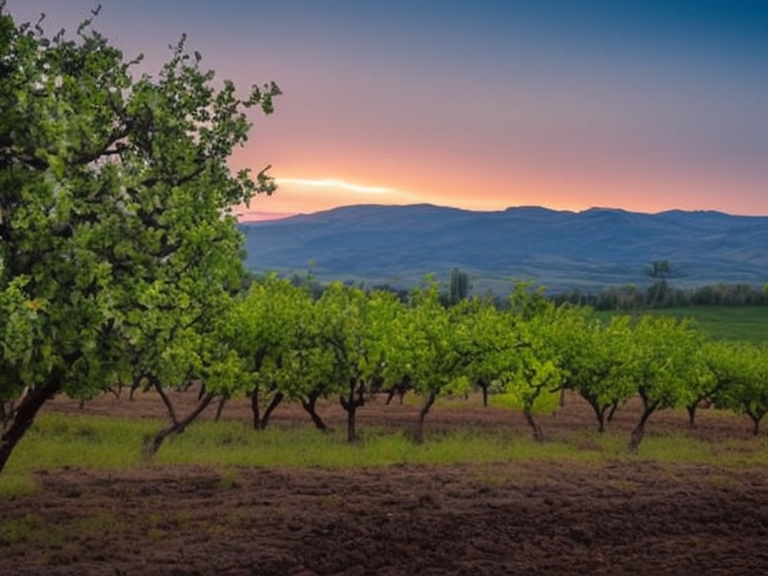
Growing fruit trees in Idaho (Zones 4–7) requires selecting varieties that resist common diseases while thriving in the region’s climate. Organic pest management is critical to maintaining tree health without synthetic chemicals, which often harm beneficial insects and soil ecosystems. This guide explores disease-resistant apple, peach, plum, and cherry trees for Idaho, along with organic strategies to prevent pests and maximize yields.
Why Disease-Resistant Varieties Matter
Conventional orchards often rely on chemical sprays to combat fungal, bacterial, and insect threats. However, these methods disrupt soil microbiology, harm pollinators, and contribute to pesticide resistance. Disease-resistant fruit trees, bred for natural resilience, reduce dependency on chemical interventions while producing high-quality fruit [B-6].
Research confirms that certain apple cultivars exhibit enhanced antioxidant activity, which correlates with disease resistance. For example, apples with higher vitamin C and phenolic compounds show reduced susceptibility to postharvest pathogens like Botrytis cinerea and Gloeosporium fructigenum [S-3]. Similarly, peaches treated with methyl jasmonate (a plant hormone) demonstrate increased defense enzyme activity, reducing fungal infections like Penicillium expansum [S-2].
Recommended Disease-Resistant Varieties for Idaho
1. Apples
Idaho’s cold winters and dry summers favor hardy apple varieties resistant to scab, fire blight, and cedar-apple rust.
- ‘Liberty’ – Highly resistant to apple scab and fire blight, with crisp, tart fruit ideal for fresh eating and cider [B-6].
- ‘Honeycrisp’ – Cold-hardy and moderately resistant to scab, though susceptible to fire blight in wet springs [B-6].
- ‘RedFree’ – Early-ripening with strong resistance to scab and mildew, perfect for short growing seasons [A-2].
Organic Tip: Dormant oil sprays in early spring smother overwintering pests like aphids and mites without harming beneficial insects [B-10].
2. Peaches
Peaches are prone to bacterial spot and brown rot, but select varieties tolerate Idaho’s temperature swings.
- ‘Reliance’ – Frost-tolerant and resistant to bacterial spot, producing sweet, freestone fruit [B-9].
- ‘Redhaven’ – Early-ripening with moderate resistance to brown rot, a fungal disease that thrives in humid conditions [B-9].
Organic Tip: UV-C irradiation (3–10 minutes) post-harvest reduces brown rot and chilling injury in stored peaches [S-5].
3. Plums
European plums outperform Japanese varieties in Idaho’s colder zones, with better disease resistance.
- ‘Stanley’ – Self-pollinating and resistant to black knot fungus, a major plum pathogen [B-6].
- ‘Shiro’ – Sweet, yellow Japanese plum with moderate resistance to bacterial canker [B-6].
Organic Tip: Kaolin clay sprays deter plum curculio beetles while reflecting sunlight to prevent sunscald [B-7].
4. Cherries
Cherries face threats from cherry leaf spot and brown rot, but resistant cultivars minimize losses.
- ‘Montmorency’ – Tart pie cherry with strong resistance to leaf spot and bacterial canker [S-1].
- ‘Stella’ – Self-fertile sweet cherry with moderate resistance to cracking and brown rot [S-1].
Organic Tip: Pichia membranaefaciens (a beneficial yeast) combined with salicylic acid suppresses brown rot by boosting chitinase and peroxidase activity in fruit [S-4].
Organic Pest Prevention Strategies
1. Soil and Root Health
Healthy soil fosters resilient trees. Amend planting holes with compost and mulch with wood chips to retain moisture and suppress weeds [B-4]. Avoid synthetic fertilizers, which promote soft growth vulnerable to pests like aphids [B-3].
2. Biological Controls
- Beneficial Insects – Ladybugs and lacewings prey on aphids, while parasitic wasps target codling moth larvae [B-5].
- Nematodes – Steinernema carpocapsae (microscopic worms) applied to soil kill apple maggot pupae [B-8].
3. Botanical Sprays
- Neem Oil – Disrupts insect feeding and egg-laying without harming pollinators [B-5].
- Garlic & Chili Spray – Repels borers and beetles when applied during bud swell [A-5].
4. Cultural Practices
- Pruning – Open canopies improve airflow, reducing fungal infections like powdery mildew [B-6].
- Sanitation – Remove fallen fruit and diseased wood to break pest life cycles [B-3].
Estimated Yields for the First 5 Years
| Tree Type | Year 1–2 | Year 3–4 | Year 5+ |
|---|---|---|---|
| Apple | 0–5 lbs | 10–20 lbs | 50–100 lbs |
| Peach | 0–3 lbs | 15–30 lbs | 50–75 lbs |
| Plum | 0–5 lbs | 20–40 lbs | 75–150 lbs |
| Cherry | 0–2 lbs | 10–25 lbs | 30–50 lbs |
Yields assume proper pollination, disease management, and irrigation [B-2].
Conclusion
Idaho growers can achieve robust, chemical-free orchards by selecting disease-resistant varieties and implementing organic pest controls. By prioritizing soil health and biodiversity, homesteaders ensure long-term fruit production while safeguarding ecosystems.
Science Papers:
- [S-1] “Suppression of postharvest blue mould of apple fruit by Cryptococcus laurentii and N6-benzyladenine” by Ting Yu, Lianping Wang, Yun Yin, Fengqin Feng∗, Xiaodong Zheng∗ (Journal of the Science of Food and Agriculture J Sci Food Agric 88:1266–1271 (2008))
- [S-2] “Enhancing disease resistance in peach fruit with methyl jasmonate” by Peng Jin, Yonghua Zheng, Shuangshuang Tang, Huaijin Rui and Chien Y Wang (Journal of Agricultural and Food Chemistry 2009)
- [S-3] “Relationship of apple vitamin C and antioxidant contents to harvest date and postharvest pathogen infection” by Mark W Davey, Annemarie Auwerkerken and Johan Keulemans (Journal of the Science of Food and Agriculture J Sci Food Agric 87:802–813 (2007))
- [S-4] “Effect of Pichia membranaefaciens combined with salicylic acid on controlling brown rot in peach fruit and the mechanisms involved” by Xiangbin Xu, Zhulong Chan, Yong Xu and Shiping Tian1∗ (Journal of the Science of Food and Agriculture 88:1786–1793 (2008))
- [S-5] “UV-C irradiation reduces breakdown and chilling injury of peaches during cold storage” by Gustavo Gonzalez-Aguilar, Chien Y Wang and George J Buta (Journal of the Science of Food and Agriculture 84:415–422 2004)
- [S-6] “Differential effect of organic cultivation on the levels of phenolics, peroxidase and capsidiol in sweet peppers” by Francisco M del Amor, Ana Serrano-Mart´ınez, Isabel Fortea and Estrella N ´u ˜nez-Delicado2∗ (Journal of the Science of Food and Agriculture J Sci Food Agric 88:770–777 (2008))
Books:
- [B-1] “The Mother Earth News Guide to Vegetable Gardening” by Mother Earth News
- [B-2] “Idaho Master Gardener Handbook” (author unknown)
- [B-3] “Backyard secrets of the garden experts” by Garisto Leslie
- [B-4] “Mini Farming Self-Sufficiency on 1 Acre Brett L Markham” (author unknown)
- [B-5] “1001 all-natural secrets to a pest-free property” by Bader Myles
- [B-6] “Gardening at a glance the organic gardeners handbook on vegetables fruits nuts herbs” by Cobb Tanya Denckla 1956
- [B-7] “Giant book of garden solutions 1954 natural remedies to handle your toughest garden problems” by Baker Jerry
- [B-8] “Your organic allotment” by Spence Ian
- [B-9] “Landscape Maintenance Schedule” (author unknown)
- [B-10] “The garden primer” by Damrosch Barbara
Articles:
- [A-1] “There are antibiotics in your organic apples – NaturalNews.com, March 13, 2013″ by NaturalNews.com
- [A-2] “Antibiotic use on organic apples and pears pr – NaturalNews.com, March 19, 2013″ by NaturalNews.com
- [A-3] “4 – Alliance for Natural Health, September 24, 2013” by Alliance for Natural Health – ANH-USA.org
- [A-4] “Are Your Apples Full of Antibiotic Drugs” by GreenMedInfo.com
- [A-5] “A guide to planting fruit trees in poor-quality soil – NaturalNews.com, November 06, 2018″ by NaturalNews.com
- [A-6] “The Amazing Healing Properties of Apples” by GreenMedInfo.com
- [A-7] “The amazing healing properties of apples – NaturalNews.com, January 19, 2024″ by NaturalNews.com
- [A-8] “Key Insights digital.2017pdf” by TheTruthAboutCancer.com
- [A-9] “Side effects of GMOs – Ask your doctor if CAN – NaturalNews.com, October 16, 2012″ by NaturalNews.com
- [A-10] “Bill Gates pushing to transform natural bananas into GMO FRANKENFOOD – NaturalNews.com, August 02, 2022″ by NaturalNews.com
- [A-11] “The plot to keep you sick (Opinion) – NaturalNews.com, March 04, 2011″ by NaturalNews.com
- [A-12] “The most important FOOD SCIENCE stories of 2019 – NaturalNews.com, December 23, 2019″ by NaturalNews.com
- [A-13] “Artificial sweetener could worsen symptoms of Crohns disease – NaturalNews.com, May 03, 2020″ by NaturalNews.com
- [A-14] “Slimy jute mallow spider plant and other African vegetables hailed as superfoods – NaturalNews.com, June 21, 2022″ by NaturalNews.com
- [A-15] “Raw Broccoli Cabbage Slash Bladder Cancer Ri – NaturalNews.com, July 18, 2008″ by NaturalNews.com

Bob Mollis is a gentle soul with a green thumb and a love for the simple life. As a seasoned homesteader and grandfather, Bob has spent decades mastering self-sufficiency.
On sprouts.farm, Bob shares tales from his adventures in gardening, raising small animals, growing fruit and nut trees, beekeeping, and woodworking. With a twinkle in his eye, he offers practical tips, personal anecdotes, and inspiring stories from his own journey.
Bob’s writing is warm and engaging, like sitting down with your favorite uncle. He’s not afraid to get messy or try something new, sharing wisdom with anyone willing to listen.